Learning Punjabi at least the everyday, practical version of it doesn’t usually start with grammar rules. It starts with phrases. The kind you hear in markets, at family gatherings, or, honestly, just passing by someone on the street.
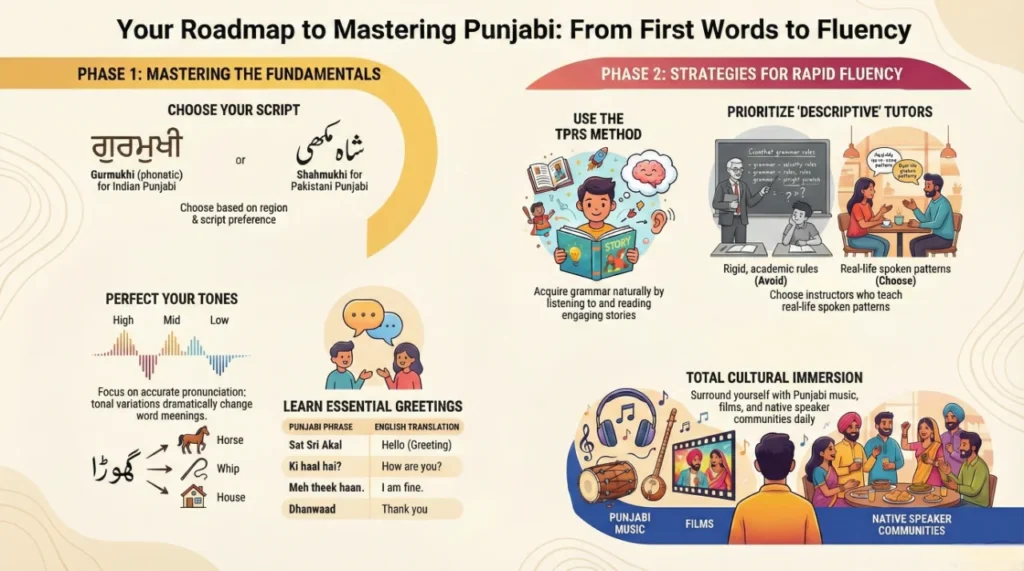
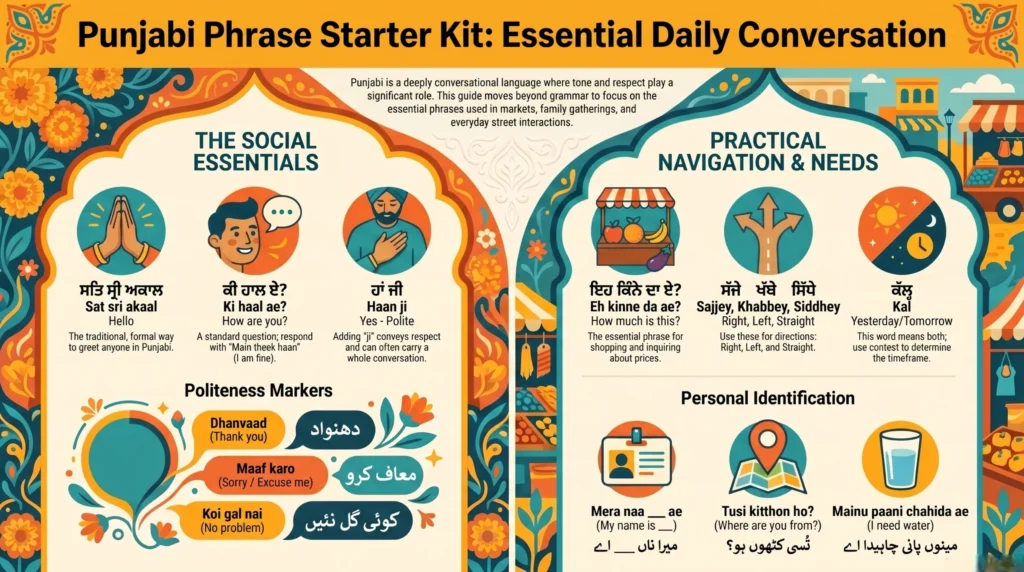
Essential Punjabi phrases for daily conversation include greetings like Sat sri akal (Hello), questions like Ki haal aa? (How are you?), and polite expressions such as Dhanvaad (Thank you) or Maaf karo (Sorry). These are the building blocks. Maybe not enough to sound fluent, but enough to feel connected and that matters more than people expect.
In DesiLingua, the goal isn’t just memorization. It’s about helping you to learn Punjabi naturally. So instead of overwhelming you with theory, this guide focuses on phrases you’ll actually say… or at least recognize when someone says them to you.
Why Learn Punjabi Phrases First?
There’s something slightly counterintuitive here. You might think vocabulary lists or grammar should come first. But phrases complete thoughts are faster. More useful too.
I’ve seen beginners freeze when asked a simple question, not because they don’t know the words, but because they’ve never heard them together. That’s where phrases help. They reduce thinking time.
Also, and this might sound small, but it’s not Punjabi is deeply conversational. Tone, respect, warmth… they all show up in how you say things. So learning phrases early gives you a kind of cultural shortcut.
Greetings & Basic Interaction (Most Used Daily)
Let’s start simple. These are phrases you’ll use almost immediately.
| Punjabi | Romanised | English |
| ست سری اکال | Sat sri akaal | Hello (formal/traditional) |
| کی حال اے؟ | Ki haal ae? | How are you? |
| تُسی کیویں ہو؟ | Tusi kiven ho? | How are you? (formal) |
| میں ٹھیک آں | Main theek haan | I am fine |
| میں ودھیا | Main wadhiya | I am good |
| ہور دس | Hor dass | What’s up? |
| چنگا | Changa | Good / Okay |
| جی آیا نوں | Ji aaya nu | Welcome |
| رب راکھا | Rab rakha | Goodbye (may God protect you) |
| پھر ملاں گے | Phir milange | See you later |
You’ll notice something there are multiple ways to say “How are you?”. That’s normal. Punjabi isn’t rigid. It adapts to tone, familiarity, even mood.
Politeness & Everyday Expressions
This is where conversations feel… human. Without these, everything sounds a bit blunt.
| Punjabi | Romanized | English |
| دھنواد | Dhanvaad | Thank you |
| شکریہ | Shukriya | Thank you (alternative) |
| مہربانی | Meherbani | Please |
| کرپا کرکے | Kirpa karke | Please (requesting) |
| معاف کرو | Maaf karo | Sorry / Excuse me |
| کوئی گل نئیں | Koi gal nai | No problem |
| ہاں جی | Haan ji | Yes (polite) |
| نہیں | Nahi | No |
| کیوں نہیں؟ | Kyun nahi? | Why not? |
| بس! | Bas! | Enough / Stop |
I’ll be honest Haan ji alone can carry an entire conversation sometimes. Tone does a lot of work.
Introducing Yourself & Basic Identity
These phrases come up quickly, especially if you’re meeting someone new.
| Punjabi | Romanised | English |
| میرا ناں ___ اے | Mera naa ___ ae | My name is ___ |
| تُہاڈا ناں کی اے؟ | Tuhada naa ki ae? | What is your name? |
| تُہانوں مل کے خوشی ہوئی | Tuhanu mil ke khushi hoi | Nice to meet you |
| تُسی کتھوں ہو؟ | Tusi kitthon ho? | Where are you from? |
| میں ___ توں آں | Main ___ ton aan | I am from ___ |
| اے کی اے؟ | Eh ki ae? | What is this? |
| اوہ کون اے؟ | Oh kaun ae? | Who is that? |
| پاجی | Pa ji | Brother (respectful) |
There’s something interesting here Punjabi often uses respect naturally, even in casual speech. Words like Pa ji aren’t just labels; they set the tone.
Daily Questions & Directions (Getting Around)
At some point, you’ll need to ask where something is… or understand where someone is telling you to go. These phrases help, even if your pronunciation isn’t perfect yet.
| Punjabi | Romanised | English |
| کی کر رہا اے؟ | Ki kar reha ae? | What are you doing? |
| کِتھے جا رہے ہو؟ | Kitthe ja rahe ho? | Where are you going? |
| اتھے آؤ | Ethey aao | Come here |
| اوتھے جاؤ | Othey jao | Go there |
| سجے | Sajjey | Right |
| کھبے | Khabbey | Left |
| سیدھے | Siddhey | Straight |
Now, realistically… people don’t always speak this clearly. Words blend. Sometimes “Kithey ja reha hai?” sounds like one long word. That’s normal. It gets easier the more you hear it.
Needs, Shopping & Everyday Situations
This is where language becomes useful very quickly. Food, prices, basic needs these come up almost immediately.
| Punjabi | Romanised | English |
| مینوں پانی چاہیدا اے | Mainu paani chahida ae | I need water |
| کھانا | Khaana | Food / To eat |
| اے کِنے دا اے؟ | Eh kinne da ae? | How much is this? |
| بہت مہنگا اے | Bohat mehnga ae | It is too expensive |
| تُسی انگلش بولدے ہو؟ | Tusi English bolde ho? | Do you speak English? |
A small thing I’ve noticed people often hesitate before saying “Bahut mehenga hai”. It feels a bit direct. But honestly, in markets, it’s completely normal. Expected, even.
Time & Basic Everyday Words
Time expressions are simple, but they show up everywhere. You’ll hear these constantly.
| Punjabi | Romanized | English |
| شبھ سویرا | Shubh saver | Good morning |
| شبھ رات | Shubh raat | Good night |
| اج | Ajj | Today |
| کل | Kal | Tomorrow / Yesterday |
| ہن | Hun | Now |
| بعد وچ | Baad vich | Later |
“Kal” is one of those slightly confusing ones. It can mean yesterday or tomorrow. Context decides. Not always obvious at first but you get used to it.
Putting It Together: Mini Conversations
This is where phrases start to feel alive. Not perfect dialogues, just… realistic enough.
Example 1: Simple Greeting
Punjabi + English
- A: Sat sri akal (Hello)
- B: Sat sri akal (Hello)
- A: Ki haal ae? (How are you?)
- B: Main theek haan, tusi dasso (I am fine, you tell me / how are you?)
There’s a rhythm here. You’ll notice people often return the question—it’s almost automatic.
Example 2: At a Shop
Punjabi + English
- A: Aeh kinne da ae? (How much is this?)
- B: 500 rupay (500 rupees)
- A: Bahut mehenga ae (It is too expensive)
- B: Chalo, 400 de do (Okay, give 400)
Not every interaction goes this smoothly, of course. Sometimes there’s back-and-forth. Sometimes a lot of it.
Example 3: Asking Direction
Punjabi + English
- A: Bhai, railway station kithey ae? (Brother, where is the railway station?)
- B: Sidhey jao, phir sajjey mur jao (Go straight, then turn right)
Even if you only catch “sidhey” (straight) and “sajjey” (right), you can still figure things out. That’s the goal partial understanding is still progress.
Subtle Mistakes Beginners Make (And It’s Fine)
This part might not show up in most blogs, but it should.
- Mixing “Tusi” and “Tu” (formal vs informal)
- Overusing direct translations from English
- Saying phrases correctly… but with hesitant tone
None of these are serious problems. They’re expected.
Language learning isn’t linear. Sometimes you feel confident one day, and completely stuck the next. That’s normal even if it feels frustrating.
Conclusion
Learning Punjabi doesn’t really happen all at once it builds slowly, phrase by phrase, interaction by interaction. These everyday expressions might seem simple, but they carry a lot of meaning in real conversations. You may not remember all of them immediately, and that’s fine; even using a few can make a noticeable difference. Over time, things start to feel more natural, almost without realizing it. And perhaps that’s the point, not perfection, just progress that feels real.