So you’ve married into a Punjabi family. Or maybe you’re about to. Either way, you’ve probably already noticed something the conversations get louder, the food gets better, and somehow there’s always more chai. And somewhere in the middle of all that warmth, there’s this one quiet wish: to actually understand what’s being said.
Learning conversational Punjabi for your spouse’s family isn’t just about language. It’s about closing a distance that words or rather, the lack of them can quietly create. A simple ਸਤ ਸ੍ਰੀ ਅਕਾਲ (Sat Sri Akal) from you will do more for your relationship with the family than hours of polite nodding ever could. That much is certain.
This guide is for you, the partner who didn’t grow up with Punjabi, but wants to show up differently. We’ll cover essential phrases, family vocabulary, mealtime expressions, learning strategies, and the cultural nuances that really matter. No Gurmukhi script exams. No grammar drills. Just practical, real-world Punjabi you can actually use.
Whether you’re preparing for Diwali at the in-laws, a family wedding (ਵਿਆਹ / viah), or just a Sunday lunch even a handful of phrases spoken with genuine effort changes everything.
Why Learning Punjabi Specifically Matters (More Than You Might Think)
There are over 125 million Punjabi speakers worldwide. It’s the 10th most spoken language on the planet, and for many families especially those with roots in Indian Punjab or Pakistani Punjab it’s the emotional language. The one used for jokes, for scolding, for blessings. The one that carries feeling.
English works fine for logistics. But Punjabi is where the heart lives. And when you make even a small effort to enter that space, families notice. They really do.
I’ve heard from so many people in cross-cultural relationships who say the moment they tried just tried to speak a few words of Punjabi, the whole room shifted. Smiles, laughter, more warmth than they expected. It doesn’t take fluency. It takes sincerity.
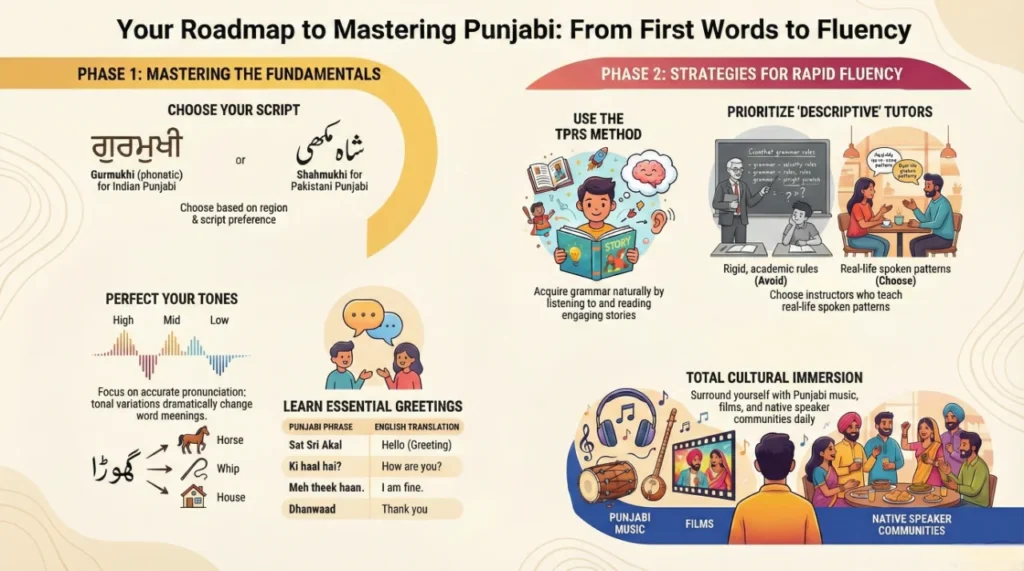
Start Here: Essential Punjabi Greetings & Everyday Phrases
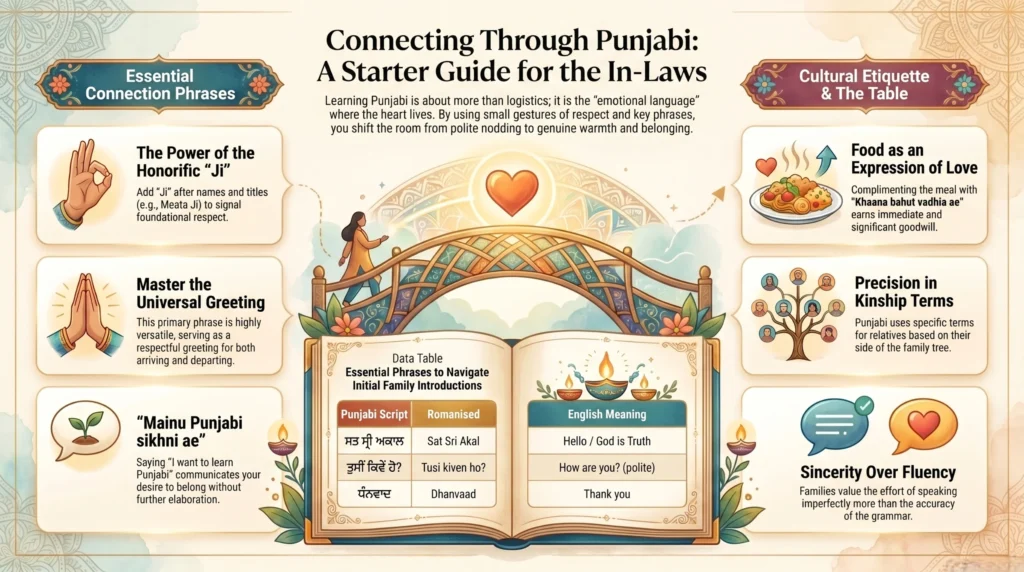
Before diving into vocabulary lists, one principle worth knowing: add ਜੀ (ji) after names and titles whenever speaking to elders or people you’re being introduced to. It’s a small honorific that signals respect, and in Punjabi culture, respect is foundational. Something like ਮਾਤਾ ਜੀ (Maata Ji) instead of just “Maata” signals that you understand the family’s values without saying a word about it.
Here are the core greetings to start with. Practice these until they feel natural, not rehearsed:
| ਪੰਜਾਬੀ (Punjabi Script) | Romanised | English Meaning |
| ਸਤ ਸ੍ਰੀ ਅਕਾਲ | Sat Sri Akal | Hello / God is Truth |
| ਤੁਸੀਂ ਕਿਵੇਂ ਹੋ? | Tusi kiven ho? | How are you? (polite) |
| ਮੈਂ ਵਧੀਆ ਹਾਂ | Main vadhia haan | I am fine / great |
| ਸ਼ੁਭ ਸਵੇਰ | Shubh Saver | Good Morning |
| ਸ਼ੁਭ ਰਾਤ | Shubh Raat | Good Night |
| ਧੰਨਵਾਦ | Dhanvaad | Thank you |
| ਮਾਫ਼ ਕਰਨਾ | Maaf karna | Sorry / Excuse me |
| ਫਿਰ ਮਿਲਾਂਗੇ | Phir milaange | See you again |
A few notes: Sat Sri Akal works as both hello and goodbye. You’ll hear it constantly. And Tusi kiven ho? is the polite form of ‘how are you?’ use this with elders rather than the more casual Ki haal hai?, which is fine for peers or younger family members.
Punjabi Family Terms You Absolutely Need to Know
Here’s where things get interesting and a little overwhelming at first. Punjabi has a remarkably specific kinship vocabulary. There isn’t just one word for ‘uncle’ or ‘aunt.’ There are distinct terms depending on which side of the family and whether the relative is older or younger. This precision reflects something deep about how Punjabi families are structured and valued.
The good news? You don’t need to master all of them overnight. Learn the ones that apply to your specific family first.
| ਪੰਜਾਬੀ (Punjabi Script) | Romanised | English Meaning |
| ਮਾਤਾ ਜੀ | Maata Ji | Respected Mother (in-law) |
| ਪਿਤਾ ਜੀ | Pita Ji | Respected Father (in-law) |
| ਭੈਣ ਜੀ | Bhain Ji | Respected Sister |
| ਵੀਰ ਜੀ / ਪਾਜੀ | Veer Ji / Paaji | Respected Brother |
| ਭਾਬੀ | Bhaabi | Brother’s Wife (sister-in-law) |
| ਦਾਦਾ ਜੀ | Daada Ji | Paternal Grandfather |
| ਦਾਦੀ ਜੀ | Daadi Ji | Paternal Grandmother |
| ਨਾਨਾ ਜੀ | Naana Ji | Maternal Grandfather |
| ਨਾਨੀ ਜੀ | Naani Ji | Maternal Grandmother |
| ਮਾਸੀ ਜੀ | Maasi Ji | Mother’s sister |
A key cultural note: the collective word for family is ਪਰਿਵਾਰ (parivaar), but you’ll often hear the warmer, more colloquial ਟੱਬਰ (tabbar) used at home. And ਭਾਬੀ (Bhaabi) your brother-in-law’s wife is a term you’ll use a lot in day-to-day family settings.
Mealtime Phrases: Because Food Is Everything
If there’s one area where your Punjabi language efforts will pay off fastest, it’s at the dinner table. Punjabi families express love through food. Refusing seconds can feel like rejection. Complimenting the food even imperfectly is an act of connection.
These phrases will genuinely earn you goodwill:
| ਪੰਜਾਬੀ (Punjabi Script) | Romanised | English Meaning |
| ਖਾਣਾ ਬਹੁਤ ਵਧੀਆ ਹੈ | Khaana bahut vadhia ae | The food is very delicious |
| ਹੋਰ ਲਓ ਜੀ | Hor lao ji | Please take more (food) |
| ਇਹ ਕੀ ਬਣਾਇਆ ਹੈ? | Ih ki banaaya ae? | What did you make? |
| ਚਾਹ ਪੀਓਗੇ ਜੀ? | Chaah peeo ge? | Will you have some tea? |
| ਹਾਂ ਜੀ, ਜ਼ਰੂਰ | Haan ji, zaroor | Yes, certainly / of course |
One phrase worth memorising early: ਖਾਣਾ ਬਹੁਤ ਵਧੀਆ ਹੈ (Khaana bahut vadhia ae) ‘the food is very delicious.’ Say this after your first few bites of anything your mother-in-law has cooked. Watch what happens.
Compliments, Warm Phrases & Relationship Builders
Beyond greetings and mealtimes, there are certain phrases that simply open people’s hearts. These are the expressions that show you’re trying not just to communicate, but to belong. Use them genuinely, not as performance.
| ਪੰਜਾਬੀ (Punjabi Script) | Romanised | English Meaning |
| ਬਹੁਤ ਵਧੀਆ | Bahut vadhia | Very wonderful / great |
| ਤੁਸੀਂ ਬਹੁਤ ਪਿਆਰੇ ਹੋ | Tusi bahut pyaare ho | You are very lovely/kind |
| ਮੈਂ ਪੰਜਾਬੀ ਸਿੱਖਣਾ ਚਾਹੁੰਦਾ ਹਾਂ। | Main Punjabi sikhna chahunda/chahundi haan | I want to learn Punjabi |
| ਤੁਹਾਡੇ ਨਾਲ ਮਿਲ ਕੇ ਖੁਸ਼ੀ ਹੋਈ | Tuhaade naal mil ke khushi hoyi | I’m happy to have met you |
| ਤੁਹਾਡਾ ਘਰ ਬਹੁਤ ਸੁੰਦਰ ਹੈ | Tuhaada ghar bahut sundar ae | Your home is very beautiful |
| ਵਾਹਿਗੁਰੂ ਮਿਹਰ ਕਰੇ | Waheguru mehar kare | May God be merciful (blessing) |
ਮੈਂ ਪੰਜਾਬੀ ਸਿੱਖਣਾ ਚਾਹੁੰਦਾ ਹਾਂ। (Main Punjabi sikhna chahunda/chahundi haan) ‘I want to learn Punjabi’ is perhaps the most powerful phrase on this entire list. Say it to any family member. It tells them everything without elaboration.
Tips for Actually Making It Stick
Learning a language for a specific, emotional reason like connecting with people you love is actually a huge advantage. Motivation is not your problem. The challenge is consistency and, sometimes, the vulnerability of speaking imperfectly in front of people you want to impress.
A few things that genuinely help:
• Start with your immediate household vocabulary, the words that come up every day in your specific family. Not a generic list.
• Ask your spouse to teach you one phrase a day. Make it a small ritual. It becomes its own form of bonding.
• Label things around your house in Punjabi. ਦਰਵਾਜ਼ਾ (Darwaaza) on the door. ਰਸੋਈ (Rasoi) on the kitchen. Silly, maybe, but it works.
• Watch Punjabi films with subtitles. Even a few minutes of Pollywood Punjabi cinema gives you a feel for natural speech rhythm, tone, and humor.
• Don’t wait until you’re ‘ready.’ There’s no such thing. Try a greeting next time you see the family. The stumbling is part of it.
• Use the honorific ਜੀ (ji) liberally until you’re told otherwise. It costs nothing and signals everything.
One more thing, perhaps a little obvious but still worth saying: celebrate small wins. The first time you greet someone correctly without thinking, that’s worth acknowledging. Language learning is genuinely slow, and it helps to notice the progress.
A Note on Gurmukhi Script vs. Romanised Punjabi
You might be wondering whether you need to learn the Gurmukhi script. The honest answer is: not immediately. Romanised Punjabi phonetic spelling using English letters is perfectly functional for conversational learning. Most resources for beginners use it, and your family will understand you just fine.
That said, if you do eventually learn even basic Gurmukhi, it opens up a richer world of religious texts, song lyrics as written, family names as they were intended. It’s not a requirement. But it is a gift, if you have the time for it.
Cultural Nuances That Matter as Much as the Words
Language and culture can’t really be separated, and Punjabi is no exception. A few things worth knowing beyond the phrases themselves:
• Respect is embedded in verb forms. When speaking to elders, the plural forms of verbs (like Tusi for ‘you’ rather than Tu) signal respect. Your spouse can help you with this it’s subtle but meaningful.
• Blessings are given freely and should be received graciously. When an elder says ਰੱਬ ਰਾਖਾ (Rabb Raakha ‘God protect you’), a simple ਧੰਨਵਾਦ (Dhanvaad) or a respectful nod is the right response.
• Food refusal is tricky. Saying ‘no thanks’ to food can read as rejection. A better approach is to accept a small amount and compliment it. ਥੋੜਾ ਜਿਹਾ (Thorra jiha ‘just a little’) is your friend.
• Silence is sometimes fine. You don’t need to fill every moment with attempted Punjabi. Sitting comfortably with family, participating in small ways, showing up that matters too.
Your First Week: A Simple Practice Plan
If you want to move beyond reading this and actually start, here’s a loose plan for your first week. Don’t overthink it.
• Day 1–2: Master the core greetings. Sat Sri Akal, Tusi kiven ho?, Dhanvaad. Say them out loud.
• Day 3–4: Learn the family terms specific to your in-laws. Write them on sticky notes with the Romanised spelling.
• Day 5: Try one mealtime phrase. Even just ‘Khaana bahut vadhia hai.’ Practice with your spouse first.
• Day 6–7: Watch a Punjabi video on YouTube, even a song with translated lyrics. Just for exposure and feel.
That’s it for week one. Small steps, real results.
Final Thoughts
Learning conversational Punjabi to connect with your spouse’s family is one of the more meaningful things you can do in a cross-cultural relationship. Not because it’s required that no one expects you to be fluent but because the effort itself is a form of love.
It says: I care about where you come from. I want to be part of it.
And Punjabi families warm, loud, generous, unapologetically expressive tend to respond to that in kind. Tenfold.
Start small. Stay consistent. And don’t be afraid to get it wrong. ਰੱਬ ਰਾਖਾ (Rabb Raakha).