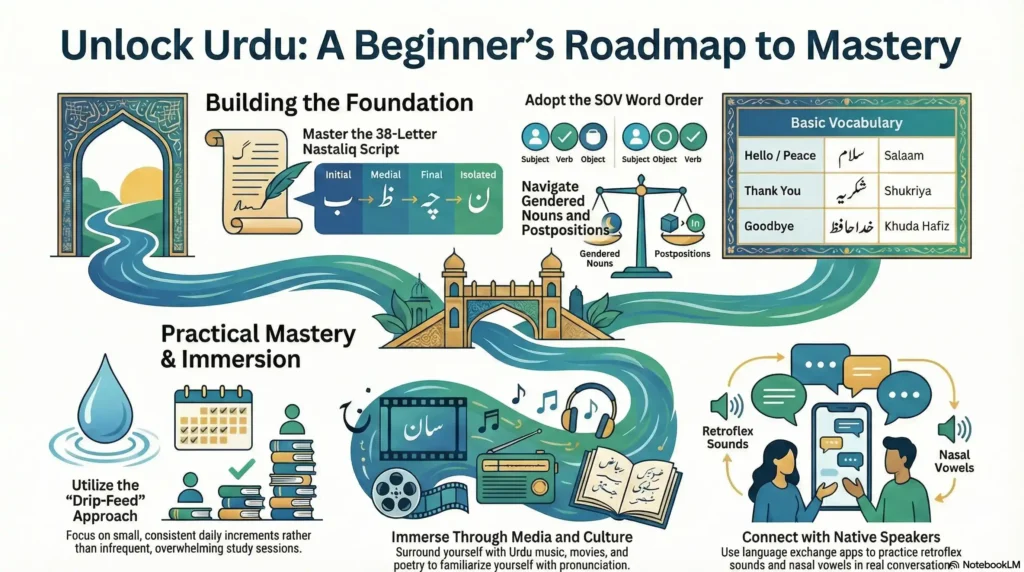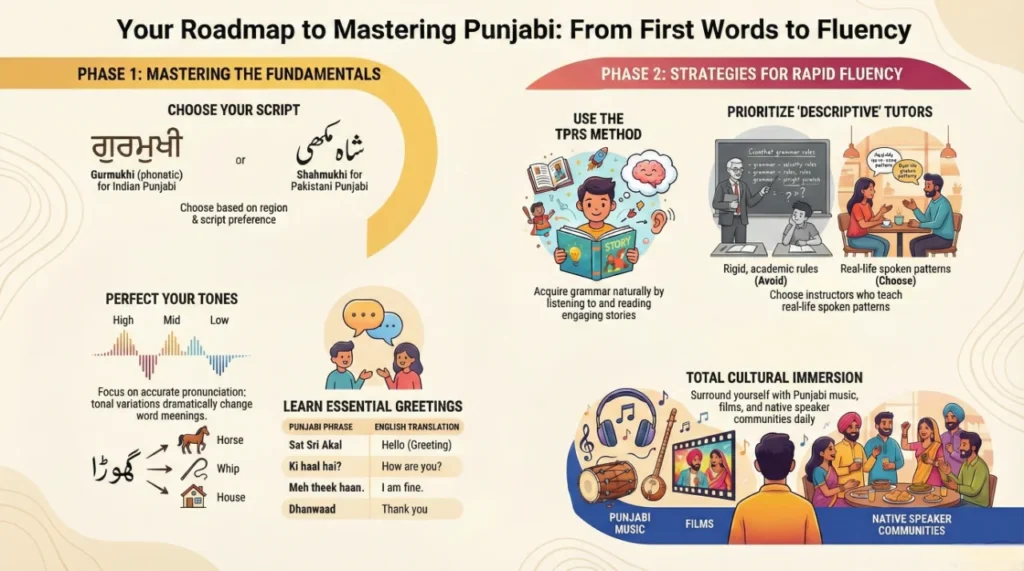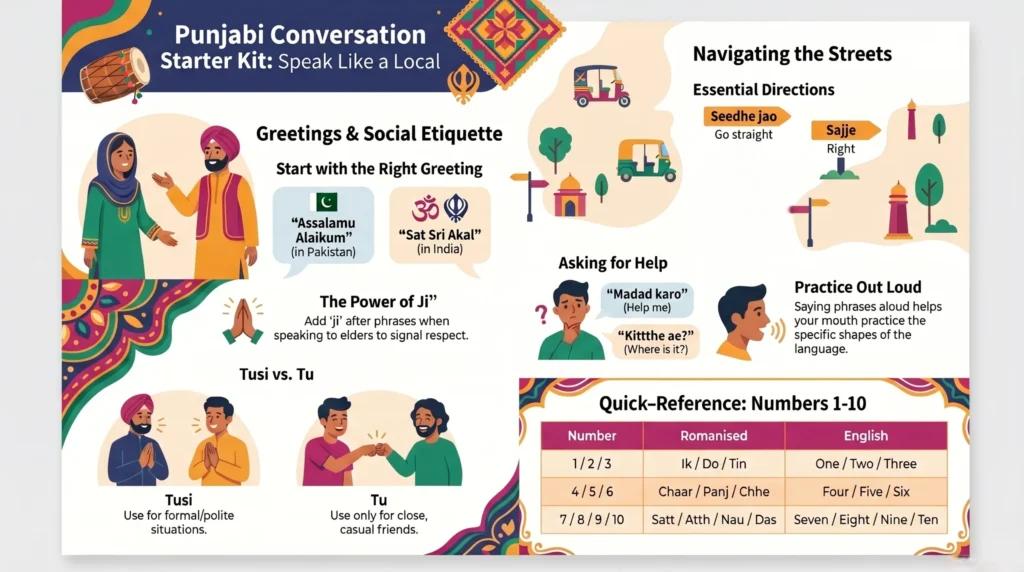
If you’re just starting out with Punjabi, the first real hurdle isn’t vocabulary. It’s not grammar either, though that comes with its own complications. The biggest challenge the one most beginners quietly struggle with is knowing what to actually say when someone starts speaking to you.
That’s where conversation dialogues come in. Simple, real-world exchanges that mirror how people actually talk. Not textbook sentences. Not formal exercises. Just everyday Punjabi the way it flows naturally between two people, whether they’re greeting a neighbor, ordering chai, or finding their way through an unfamiliar city.
This guide gives you basic Punjabi conversation dialogues for beginners, presented in three formats: Shahmukhi script (as spoken in Pakistani Punjab), Romanised transliteration (so you can pronounce it without learning the script first), and plain English. Think of it as your spoken Punjabi starter kit, something you can actually use, not just read about.
Why Romanised Transliteration Is the Smart Starting Point
There’s an ongoing debate in language learning circles: should you learn the script first, or just start speaking? Honestly, both approaches have merit. But for most beginners especially those learning Punjabi for everyday conversations with family, friends, or while traveling in Punjab romanised transliteration removes a significant barrier.
When you see ‘Tusi kiven ho?’ written in familiar letters, your brain focuses immediately on how to say it, not on decoding unfamiliar characters. You hesitate less. You engage sooner. And that early confidence, however small, tends to compound quickly. I think that matters more than people realize in the early stages of language learning.
Of course, if your goal is to read Punjabi literature or sacred texts, you’ll eventually want to learn Shahmukhi or Gurmukhi. But for conversation? Romanisation is a perfectly valid place to begin.
Dialogue 1: Greetings & Basic Hellos
Perhaps the most universally useful set of phrases in any language. Punjabi greetings carry warmth they’re never rushed. Learn these first.
| Punjabi | Romanised | English |
| السلام علیکم/ ست سری اکال | Assalamu Alaikum / Sat Sri Akal | Peace be upon you/ Hello |
| تسی کیویں ہو؟ | Tusi kiven ho? | How are you? |
| میں ٹھیک ہاں، شکریہ | Main theek haan, shukriya | I’m fine, thank you |
| تہاڈا ناں کی اے ؟ | Tuhada na ki ae? | What is your name? |
| میرا ناں ___ اے | Mera na ___ ae | My name is ___ |
| تسی کِتّھوں ہو؟ | Tusi kittho ho? | Where are you from? |
| فیر ملاں گے | Phir milaan ga | See you again / Goodbye |
Sample Dialogue: First Meeting
Ali: السلام علیکم! (Assalamu Alaikum!) Peace be upon you!
Sara: وعلیکم السلام! (Walaikum Assalam!) And upon you peace!
Ali: تسی کیویں ہو؟ (Tusi kiven ho?) How are you?
Sara: میں ٹھیک ہاں، شکریہ۔ تسی؟ (Main theek haan, shukriya. Tusi?) I’m fine, thanks. And you?
Ali: میں وی ٹھیک ہاں۔ تہاڈا ناں کی اے ؟ (Main vi theek haan. Tuhada naam ki ae?) I’m good too. What’s your name?
Sara: میرا ناں سارہ اے ۔ (Mera naam Sara ae.) My name is Sara.
Dialogue 2: Everyday Phrases for Daily Life
Once you’re past introductions, this next set of phrases covers the kind of everyday exchanges you’ll run into constantly at a shop, asking for directions, or just making small talk.
| Shahmukhi | Romanised | English |
| سیدھے جاؤ | Seedhe jao | Go straight |
| سجے / کھبے | Sajje / Khabbe | Right / Left |
| مینوں نہیں پتا | Mainu nahin pata | I don’t know |
| ذرا ہولی بولو | Zara holi bolo | Please speak slowly |
| میں سمجھیا نہیں | Main samjhya nahin | I didn’t understand |
| پانی / چاہ / کھانا | Paani / Chah / Khaana | Water / Tea / Food |
Quick Reference: Numbers in Punjabi
Numbers come up everywhere: prices, addresses, phone numbers. Here’s a compact table to get you started.
| Number | Shahmukhi / Romanised | English |
| 1 | اک / Ik | One |
| 2 | دو / Do | Two |
| 3 | تِن / Tin | Three |
| 4 | چار / Chaar | Four |
| 5 | پنج / Panj | Five |
| 6 | چھے / Chhe | Six |
| 7 | ست / Satt | Seven |
| 8 | اَٹھ / Atth | Eight |
| 9 | نَو / Nau | Nine |
| 10 | دس / Das | Ten |
Dialogue 3: Asking for Help & Finding Your Way
Getting lost is one of those experiences that, honestly, teaches you more Punjabi in five minutes than an hour of studying. These phrases are practical they’ll help you find your way and maybe start a real conversation with a local.
| Shahmukhi | Romanised | English |
| ہسپتال کِتّھےاے ؟ | Haspatal kittthe ae? | Where is the hospital? |
| بس سٹاپ کِتّھے اے؟ | Bus stop kittthe ae? | Where is the bus stop? |
| مدد کرو | Madad karo | Please help / Help me |
| کِتنی دور اے؟ | Kitni door ae? | How far is it? |
| نزدیک ہے کوئی ہوٹل؟ | Nazdeek hai koi hotel? | Is there a hotel nearby? |
| تھانہ کِتّھے اے؟ | Thaana kittthe ae? | Where is the police station? |
| ٹیکسی بلاؤ | Taxi bulao | Call a taxi |
| مینوں لاہور جانا اے | Mainu Lahore jaana ae | I need to go to Lahore |
Formal vs. Casual Punjabi: What’s the Difference?
Punjabi has distinct levels of politeness, and mixing them up well usually doesn’t cause any real harm, but people will notice. Here’s a quick comparison of how the same idea sounds in formal versus casual speech.
| Meaning | Formal (Tusi) | Casual (Tu) |
| How are you? | Tusi kiven ho? / تسی کیویں ہو؟ | Tu kiven aen? / توں کیویں ایں؟ |
| Come here | Ithe aao ji / اِتھے آؤ جی | Ithe aa / اِتھے آ |
| Sit down | Baitho ji / بیٹھو جی | Baith / بیٹھ |
| What are you doing? | Tusi ki kar rahe ho? / تسی کی کر رہے ہو؟ | Tu ki kar reha aen? / توں کی کر رہا ایں؟ |
| Eat food | Khana khao ji / کھانا کھاؤ جی | Khana kha / کھانا کھا |
Dialogue 4: Expressing Feelings & Reactions
This section is one I find particularly useful knowing how to express how you feel, even in basic terms, makes conversations so much more human and connected. These phrases go a long way.
| Shahmukhi | Romanised | English |
| مینوں چنگا نہیں لگدا | Mainu changa nahin lagda | I don’t feel well |
| افسوس ہے | Afsos hai | I’m sorry / That’s unfortunate |
| کوئی گل نہیں | Koi gal nahin | No problem / Never mind |
| بہت شکریہ | Bahut shukriya | Thank you very much |
Sample Dialogue: At a Friend’s House (یار دے گھر)
Yasir: آؤ یار، اندر آؤ! (Aao yaar, andar aao!) Come, come inside, friend!
Bilal: شکریہ یار۔ کھانا تیار ہے کیا؟ مینوں بھُک لگی اے! (Shukriya yaar. Khaana taiyar ha kya? Mainu bhukh lagi ae!) Thanks. Is the food ready? I’m starving!
Yasir: ہاں ہاں، آ جا بیٹھ۔ چاہ پیویں گا؟ (Haan haan, aa ja baith. Chah peevengaa?) Yes yes, come sit. Will you have tea?
Bilal: ضرور! ایہ بہت ودیا اے۔ (Zaroor! Eh bahut wadiya hai.) Definitely! That wonderful.Yasir: کوئی گل نہیں، یار۔ آرام نال بیٹھو۔ (Koi gal nahin, yaar. Araam naal baitho.) No problem at all. Sit comfortably.
Practical Tips for Using These Dialogues Effectively
Learning phrases from a list is just the beginning. Here’s how to actually make them stick and feel natural when you use them.
• Say them out loud, every time. Even if you’re alone. Your mouth needs to practice the shapes.
• Add ‘ji’ after phrases when speaking to elders or strangers it’s a small word that signals respect and goes a long way in Punjabi culture.
• Don’t try to memorize everything at once. Pick one dialogue, practice it until it feels automatic, then move on.
• Find a Punjabi-speaking person to practice with even five minutes of real conversation beats an hour of solitary study.
• Listen to Punjabi music, drama, or podcasts. You’ll start hearing these phrases in context, which is somehow more effective than reading them.
• Mistakes are fine. Actually, they’re expected. Native Punjabi speakers are almost universally warm and encouraging toward learners don’t let the fear of errors hold you back.
Shahmukhi vs. Gurmukhi vs. Romanised: A Quick Comparison
Beginners sometimes ask which script they should focus on. Here’s a straight comparison to help you decide based on your goal.
| Feature | Shahmukhi (Pakistan) | Gurmukhi (India/Sikh) |
| Script type | Arabic-derived (right to left) | Indigenous Punjabi (left to right) |
| Primary region | Pakistani Punjab | Indian Punjab, global Sikh diaspora |
| Used for | Everyday writing, literature, media | Religious texts, Indian government, media |
| Difficulty for beginners | Moderate (Arabic alphabet familiarity helps) | Moderate to challenging for new learners |
| Romanised alternative? | Yes widely accepted for beginners | Yes equally helpful for spoken learning |
Final Thoughts
Starting with basic Punjabi conversation dialogues is, I think, the most direct path to actually using the language, not just studying it. The phrases in this guide are drawn from everyday Punjabi life: the kind of Punjabi you’ll hear in kitchens, markets, streets, and living rooms across Punjab.
You won’t be fluent after reading this. That’s not the point. But you’ll have something better, a foundation you can build on one conversation at a time. Pick up a phrase, use it, see what happens. The rest tends to follow from there.
FAQ: Basic Punjabi Conversations for Beginners
What is the best way to start learning Punjabi conversation?
Start with simple, high-frequency phrases greetings, numbers, and everyday needs. Use romanised transliteration first so you can focus on pronunciation rather than learning the script simultaneously.
Is Shahmukhi Punjabi the same as Gurmukhi Punjabi?
The spoken language is largely the same, but the scripts are different. Shahmukhi is used in Pakistani Punjab and is written right to left in an Arabic-derived script. Gurmukhi is used in Indian Punjab and in Sikh religious contexts, written left to right.
Do I need to learn the Punjabi script to hold a conversation?
No, romanised transliteration is entirely sufficient for conversational purposes. Many fluent Punjabi speakers never formally learn the script. If you want to read literature or religious texts, then yes, learning the script becomes important.
How different is formal Punjabi from casual Punjabi?
Quite noticeably different, mainly in pronouns and verb endings. Formal speech uses ‘Tusi’ (you plural/polite) while casual speech uses ‘Tu’ (you singular/informal). When in doubt, use the formal form it’s never considered rude.
Can I learn Punjabi conversation without a teacher?
You can make meaningful progress on your own using resources like this guide. But having even occasional access to a native speaker whether through a tutor, language exchange partner, or community tends to accelerate progress significantly.
Conclusion
Learning basic Punjabi conversation is a rewarding journey that begins with simple, everyday phrases and gradually builds into meaningful connections with people and culture. Starting with Punjabi romanised transliteration makes the process accessible, allowing beginners to focus on speaking confidently rather than decoding unfamiliar scripts. Whether you’re greeting a neighbor, asking for directions, or sharing a meal with friends, these foundational dialogues give you the tools to engage naturally in real-life situations. With consistent practice, a willingness to make mistakes, and exposure to the language through music and conversation, fluency becomes an achievable goal. Every phrase you learn and use brings you one step closer to truly belonging in the rich, warm world of Punjabi language and culture.