Punjabi is one of those languages that hits differently the moment you use it with the right people. There’s something about saying “ਸਤਿ ਸ੍ਰੀ ਅਕਾਲ” (Sat Sri Akal) to a Punjabi elder and watching their face light up it’s hard to describe, but you’ll know it when it happens. Whether you’re learning the language from scratch, planning a trip to Punjab, or just want to connect more genuinely with Punjabi-speaking friends or colleagues, greetings are always the best place to start.
The thing is, Punjabi greetings aren’t one-size-fits-all. The right greeting depends on who you’re talking to, the setting, and perhaps most importantly their religion and background. A greeting that feels perfectly natural with one person might feel oddly out of place with another. That’s not a flaw in the language; that’s just how rich and layered Punjabi culture actually is.
In this guide, we’ll walk through the most common formal and informal Punjabi greetings, complete with Punjabi script, romanised spellings, English meanings, and tips on when to use each one. By the end, you should feel confident enough to greet someone in Punjabi without second-guessing yourself too much.
Why Greetings Matter So Much in Punjabi Culture
It’s probably worth pausing here for a second because greetings in Punjabi culture carry a weight that goes beyond just being polite. Punjabi society, both in India and Pakistan, places enormous value on izzat (respect) and warmth. How you greet someone signals how you view them, your relationship with them, and whether you understand the social dynamics at play.
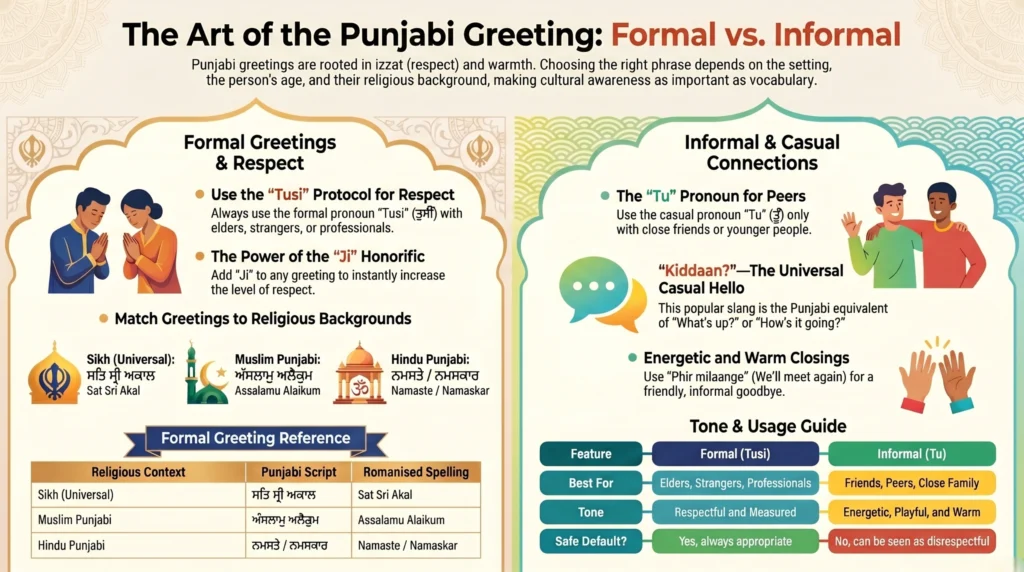
Using the formal pronoun “ਤੁਸੀਂ” (Tusi) versus the casual “ਤੂੰ” (Tu) is, in many ways, the entire difference between formal and informal Punjabi. Get this wrong, say, using Tu with someone significantly older and it can come across as disrespectful, even if that was the last thing you intended. So, it’s worth getting right from the start.
Formal Punjabi Greetings When You Need to Make a Good Impression
Formal greetings are used when meeting someone for the first time, addressing elders, speaking in professional or religious settings, or any situation where you want to show respect. Here’s a breakdown of the most widely used formal greetings in Punjabi.
Formal Greetings Table
| Punjabi Script | Romanised | English Meaning | Used By |
| ਸਤਿ ਸ੍ਰੀ ਅਕਾਲ | Sat Sri Akal | Truth is the Timeless One | Sikhs (universal) |
| ਵਾਹਿਗੁਰੂ ਜੀ ਕਾ ਖਾਲਸਾ… | Waheguru Ji Ka Khalsa… | The Khalsa belongs to God… | Sikhs (religious) |
| ਨਮਸਤੇ / ਨਮਸਕਾਰ | Namaste / Namaskar | I bow to you (respectfully) | Hindu Punjabis |
| ਅੱਸਲਾਮੁ ਅਲੈਕੁਮ | Assalamu Alaikum | Peace be upon you | Muslim Punjabis |
| ਤੁਸੀਂ ਕਿਵੇਂ ਹੋ? | Tusi kiven ho? | How are you? (formal) | General / Elders |
| ਆਦਾਬ | Aadaab | Respectful salutation | Muslim Punjabis (formal) |
Sat Sri Akal | ਸਤਿ ਸ੍ਰੀ ਅਕਾਲ
This is arguably the most important Punjabi greeting to know. “ਸਤਿ ਸ੍ਰੀ ਅਕਾਲ” (Sat Sri Akal) literally translates to “Truth is the Timeless One” a phrase rooted in Sikh theology. It’s used by Sikhs as both a hello and a goodbye, at any time of day, in virtually any setting. Religious or secular, morning or evening, it works. If you’re visiting a Punjabi Sikh household or meeting someone at a Gurdwara, this is the greeting to lead with. Adding “ਜੀ” (ji) at the end making it “Sat Sri Akal Ji” adds an extra layer of respect that elders particularly appreciate.
Waheguru Ji Ka Khalsa, Waheguru Ji Ki Fateh
This one is more specifically religious. The full phrase “ਵਾਹਿਗੁਰੂ ਜੀ ਕਾ ਖਾਲਸਾ, ਵਾਹਿਗੁਰੂ ਜੀ ਕੀ ਫ਼ਤਹਿ” (Waheguru Ji Ka Khalsa, Waheguru Ji Ki Fateh) means “The Khalsa belongs to Waheguru, Victory belongs to Waheguru.” You’ll hear this in Gurdwaras and among devout Sikhs. It’s deeply respectful and spiritually significant. Not something you’d say to a stranger on the street necessarily, but in the right context, it’s a beautiful expression of shared faith.
Assalamu Alaikum | ਅੱਸਲਾਮੁ ਅਲੈਕੁਮ
For Muslim Punjabis, particularly those in Pakistani Punjab and Muslim communities across India, “ਅੱਸਲਾਮੁ ਅਲੈਕੁਮ” (Assalamu Alaikum) is the standard formal greeting. It means “Peace be upon you,” and the response is “ਵਾ ਅਲੈਕੁਮ ਅੱਸਲਾਮ” (Wa Alaikum Assalam “And upon you be peace”). Many speakers place their right hand over their heart while saying it a small but meaningful gesture. If you’re interacting with Muslim Punjabi-speaking communities, using this greeting signals respect and cultural awareness.
Informal Punjabi Greetings For Friends, Family & Everyday Conversations
Once you’re past the formal pleasantries or if you’re jumping straight into casual conversation with a friend the tone shifts completely. Informal Punjabi greetings tend to be energetic, punchy, and often very warm. There’s a kind of joyful directness to them that’s very much part of the Punjabi personality.
Informal Greetings Table
| Punjabi Script | Romanised | English Meaning | Context |
| ਕਿੱਦਾਂ? | Kiddaan? | How’s it going? / What’s up? | Close friends, peers |
| ਕੀ ਹਾਲ ਚਾਲ? | Ki haal chaal? | How are you doing? | Friends, relatives |
| ਕੀ ਬਣਿਆ? | Ki baneya? | What’s happening? / What’s new? | Casual, youth slang |
| ਹੈਲੋ ਯਾਰ! | Hello yaar! | Hello, friend! | Young Punjabis, urban |
| ਤੂੰ ਕਿਵੇਂ ਏਂ? | Tu kiven ain? | How are you? (casual) | Very close friends |
| ਭਾਜੀ! | Bhaaji! | Brother! (respectful-casual) | Younger to older male |
Kiddaan | ਕਿੱਦਾਂ?
If there’s one informal Punjabi greeting that feels universally Punjabi, it’s “ਕਿੱਦਾਂ?” (Kiddaan). It’s the Punjabi equivalent of “What’s up?” or “How’s it going?” short, friendly, and immediately familiar. Young Punjabis use it constantly; you’ll hear it on the streets of Lahore, Amritsar, and in Punjabi diaspora communities across the UK, Canada, and Australia. It’s essentially slang at this point, but very accepted slang.
Ki Haal Chaal | ਕੀ ਹਾਲ ਚਾਲ?
Slightly more complete than Kiddaan, “ਕੀ ਹਾਲ ਚਾਲ?” (Ki haal chaal?) means “How are you doing?” It’s still informal but has a warmer, more conversational feel the kind of thing you’d say to a relative you haven’t seen in a while. A typical response might be “ਵਧੀਆ” (Vadhia “Fine / Great”) or “ਰੱਬ ਦੀ ਮਿਹਰ ਨਾਲ” (Rabb di mehar naal “By God’s grace”), which is both humble and culturally very typical.
Ki Baneya | ਕੀ ਬਣਿਆ?
This one is particularly popular among younger Punjabis. “ਕੀ ਬਣਿਆ?” (Ki baneya?) roughly translates to “What’s happened?” / “What’s new?” and is often used as a casual check-in. It has a slightly playful energy almost like you’re expecting the person to have some news or gossip to share. Very much a friend-to-friend kind of greeting.
Formal vs. Informal Punjabi Greetings At a Glance
| Feature | Formal Greeting | Informal Greeting |
| When to use | Elders, strangers, professional settings, religious contexts | Friends, peers, close family, casual encounters |
| Pronoun used | ਤੁਸੀਂ (Tusi) respectful “you” | ਤੂੰ (Tu) casual “you” |
| Tone | Respectful, warm, measured | Relaxed, energetic, playful |
| Common example | “ਸਤਿ ਸ੍ਰੀ ਅਕਾਲ ਜੀ” (Sat Sri Akal ji) | “ਕਿੱਦਾਂ ਯਾਰ?” (Kiddaan yaar?) |
| Physical gesture | Hands folded (Namaste) or hand on heart | Handshake, hug, wave |
| Safe default? | ✅ Yes always appropriate | ❌ Not always read the room |
Time-Based Greetings in Punjabi
Punjabi also has time-specific greetings, though they’re used less frequently than the all-purpose ones above. Think of them as an additional layer something you can use to sound a little more fluent and aware.
| Punjabi Script | Romanised | English | Time of Day |
| ਸ਼ੁਭ ਸਵੇਰ | Shubh Saver | Good Morning | Morning |
| ਸ਼ੁਭ ਦੁਪਹਿਰ | Shubh Dupahar | Good Afternoon | Afternoon |
| ਸ਼ੁਭ ਸੰਧਿਆ | Shubh Sandhya | Good Evening | Evening |
| ਸ਼ੁਭ ਰਾਤ੍ਰੀ | Shubh Raatri | Good Night | Night / Farewell |
These are borrowed from Sanskrit and are more commonly used in formal or Hindu Punjabi contexts. In casual speech, most Punjabis will stick with Sat Sri Akal or Kiddaan regardless of the time of day.
How to Say Goodbye in Punjabi
Greetings and farewells go hand in hand, so it’s worth covering some common Punjabi ways to say goodbye because leaving well matters just as much as arriving well.
| Punjabi Script | Romanised | English | Register |
| ਰੱਬ ਰਾਖਾ | Rabb Rakha | May God keep you | Formal / warm |
| ਖੁਦਾ ਹਾਫ਼ਿਜ਼ | Khuda Hafiz | God be with you | Formal (Muslim Punjabi) |
| ਫਿਰ ਮਿਲਾਂਗੇ | Phir milaange | We’ll meet again | Informal |
| ਟਾਟਾ ਬਾਏ | Tata Bye | See you / Bye-bye | Very casual |
| ਚੱਲ ਓਏ! | Chal oe! | Alright, see ya! | Very informal / youth |
Note that “ਰੱਬ ਰਾਖਾ” (Rabb Rakha) is one of those farewells that carries real warmth it’s not just a polite sign-off, it’s a genuine wish. You’ll hear it used by elders especially, and it always lands nicely.
The Power of “ਜੀ” (Ji) A Small Word That Means a Lot
One thing that often surprises language learners: you can make almost any Punjabi greeting more respectful by simply adding “ਜੀ” (ji) at the end. It’s an honorific particle kind of like adding “sir” or “ma’am” in English, but softer and more natural. So:
• “Sat Sri Akal” → “Sat Sri Akal Ji” (more respectful)
• “Tusi kiven ho?” → “Tusi kiven ho Ji?” (extra polite)
• Addressing someone: “Bhaaji Ji” (respected older brother/man)
It’s a small habit to build, but it makes a meaningful difference especially when speaking to elders or people you’ve just met.
Common Mistakes to Avoid
A few things worth keeping in mind as you practice:
• Don’t use “Tu” with elders. The casual pronoun Tu is reserved for close friends or people younger than you. Using it with someone older can feel disrespectful, even when your tone is friendly.
• Don’t assume one greeting fits everyone. Sat Sri Akal is a Sikh greeting. Using it with a Muslim Punjabi or Hindu Punjabi might feel slightly off not offensive, but not quite right either. When in doubt, a simple “Namaste” or “Hello ji” is safe.
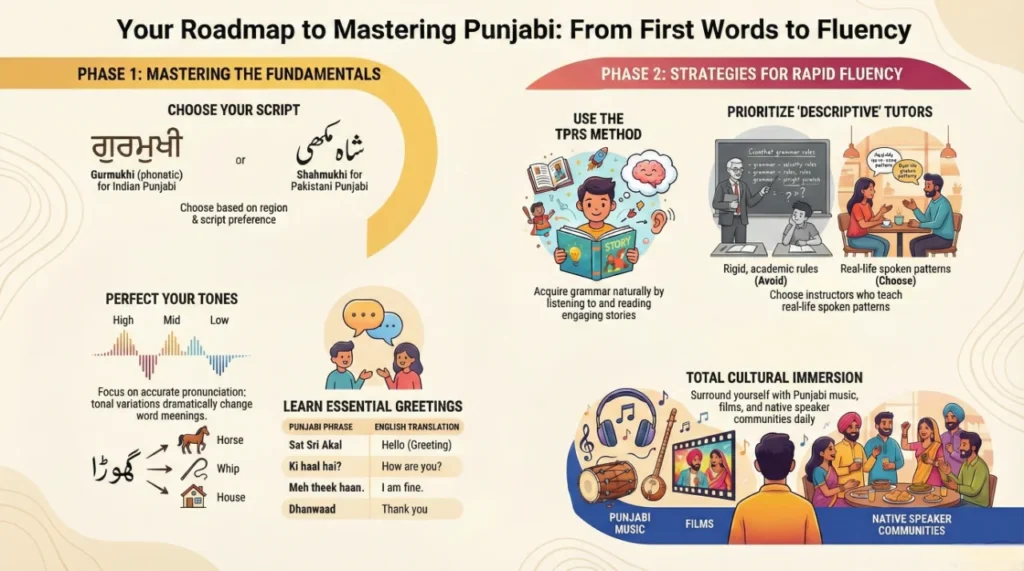
• Don’t skip the pronunciation. Punjabi has tonal qualities and sounds that don’t exist in English. Words like “ਕਿੱਦਾਂ” (Kiddaan) have specific emphasis listen to native speakers wherever possible.
Frequently Asked Questions
What is the most common way to say hello in Punjabi?
The most widely used Punjabi greeting is “ਸਤਿ ਸ੍ਰੀ ਅਕਾਲ” (Sat Sri Akal), used primarily by Sikhs. For informal settings, “ਕਿੱਦਾਂ?” (Kiddaan) is extremely common among younger Punjabis and friends.
How do you greet a Muslim Punjabi?
The appropriate greeting for a Muslim Punjabi is “ਅੱਸਲਾਮੁ ਅਲੈਕੁਮ” (Assalamu Alaikum), with the response “ਵਾ ਅਲੈਕੁਮ ਅੱਸਲਾਮ” (Wa Alaikum Assalam). You may also use “ਆਦਾਬ” (Aadaab) as a more secular respectful greeting.
What does “Ji” mean in Punjabi?
“ਜੀ” (Ji) is a Punjabi honorific particle added to names, greetings, or responses to express respect. It’s roughly equivalent to “sir” or “ma’am” in English but feels more natural and is used frequently in everyday speech.
What is the difference between Tusi and Tu in Punjabi?
“ਤੁਸੀਂ” (Tusi) is the formal/respectful second-person pronoun, used for elders, strangers, and professionals. “ਤੂੰ” (Tu) is the casual/intimate pronoun, used with close friends and people younger than you. Using Tu with an elder can come across as disrespectful.
Can I use Sat Sri Akal with non-Sikhs?
Yes, it won’t cause offence most Punjabis regardless of religion are familiar with it. However, for Muslim Punjabis it’s more natural to use Assalamu Alaikum, and for Hindu Punjabis, Namaste feels more culturally aligned. When unsure, Sat Sri Akal is generally a safe, warm default.
Quick Tips for Using Punjabi Greetings Naturally
• Start with Sat Sri Akal Ji as your default formal greeting; it’s universally understood and always appropriate in Sikh contexts.
• Use “Kiddaan?” to break the ice with Punjabi friends they’ll appreciate the effort.
• Add “Ji” liberally when talking to elders you really can’t go wrong with it.
• Pay attention to the religion and background of the person you’re greeting it genuinely matters which greeting you choose.
• Practice saying Rabb Rakha as a farewell it’s a phrase that leaves a warm impression.
Final Thoughts
Learning how to greet someone in Punjabi isn’t just about picking up a few phrases it’s about understanding a little bit of the culture, the history, and the values that sit behind those words. Punjabi is a language with deep religious roots, a complex cultural history shaped by partition, and a diaspora that’s spread across dozens of countries. The greetings carry all of that.
Start simple. Use Sat Sri Akal Ji when in doubt. Try Kiddaan with the right crowd and watch how it opens conversations. And maybe just maybe close with Rabb Rakha the next time you say goodbye to a Punjabi elder. The reaction will probably be worth more than anything in this article.If you’re serious about learning Punjabi, greetings are just the beginning. At DesiLingua, we offer structured Punjabi lessons with native-speaking tutors who can help you go from “Kiddaan” to full, confident conversations. Book a trial session today and see how quickly the language starts to feel natural.