Learning Urdu is more than just picking up a new language; it’s an entry point into a vibrant culture brimming with history, tradition, and opportunities. This guide on how to learn Urdu provides practical ideas and resources to help you master the Urdu language. By learning Urdu, you not only gain language proficiency but also enhance your problem-solving skills, creativity, and adaptability. It also opens doors to connecting with new people and cultures, which can be enriching both personally and professionally.
This comprehensive guide covers the Urdu alphabet, basic grammar, and common phrases to get you started. It also explores advanced learning tips, resources like online courses and apps, and the various reasons why learning Urdu can be beneficial. From understanding the Urdu script to immersive learning techniques, this article breaks down the main parts of learning Urdu into manageable steps, ensuring a smooth and effective learning experience.

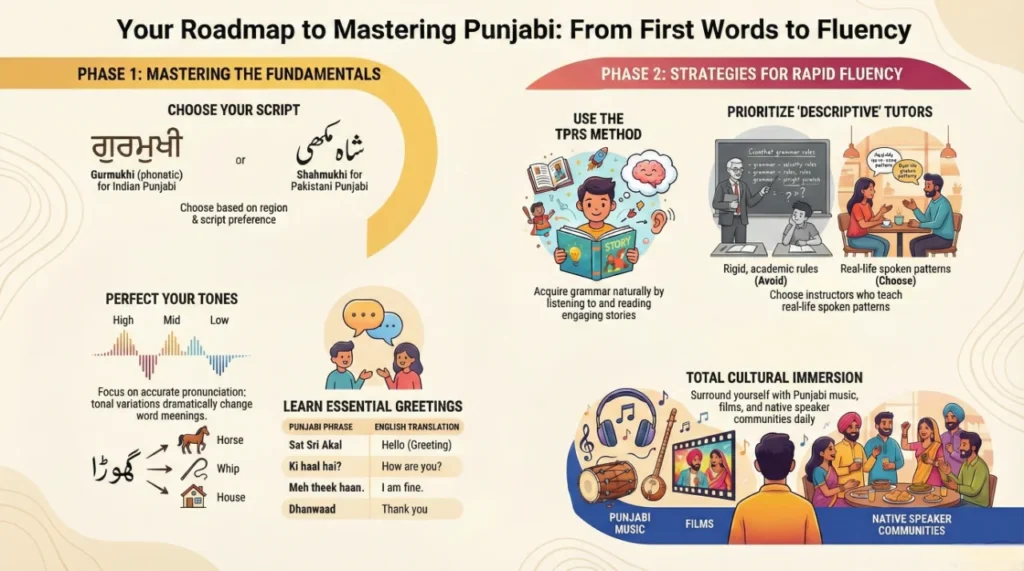
Alongside traditional learning approaches, TPRS (Teaching Proficiency through Reading and Storytelling) is discussed as a method that supports language acquisition through context and repetition. This approach places importance on spoken interaction, listening comprehension, and conversational usage, helping learners become comfortable with real-world Urdu communication. Emphasis on speaking and understanding everyday conversations allows learners to apply the language more naturally in practical situations.
Getting Started with Urdu Language
Urdu Alphabet: The Building Blocks
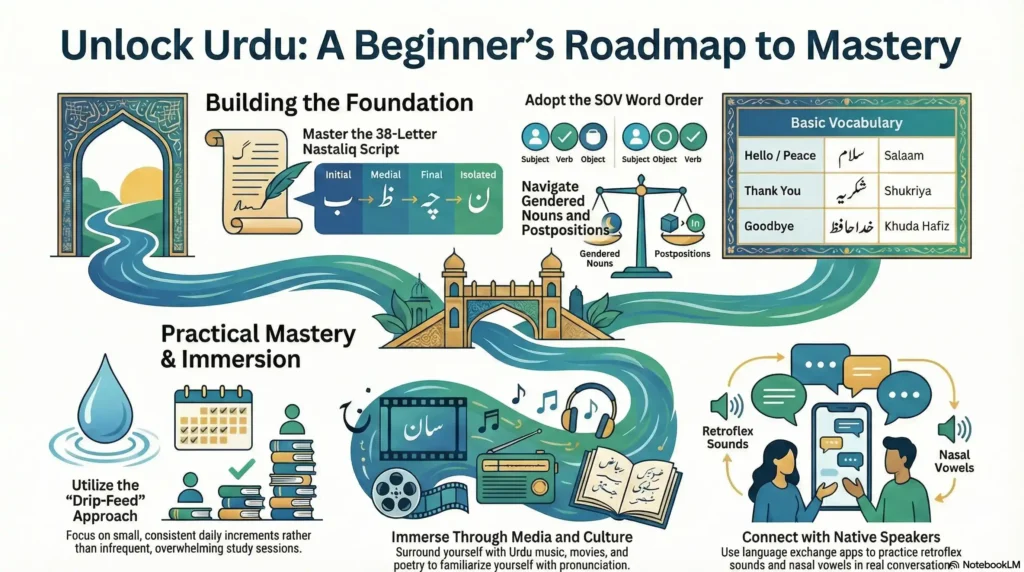
The Urdu alphabet, written in the Nastaliq style, might seem daunting initially, but it’s manageable once you understand its structure. It’s derived from the Persian alphabet, which in turn is based on the Arabic script. The Urdu script is written from right to left and consists of 38 letters.
Here’s a breakdown of how to approach learning the Urdu alphabet:
- Start with the Basics: Begin by familiarizing yourself with the individual letters. Many resources provide charts and tables showing each letter and its pronunciation.
- Understand Letter Forms: Urdu letters change form depending on their position in a word (initial, medial, final, or isolated). Learn to recognize these different forms.
- Practice Writing: Writing is crucial. Use online resources, workbooks, or even create your own practice sheets to write each letter repeatedly.
- Focus on Sounds: Pay attention to the sounds associated with each letter. Urdu has some sounds that don’t exist in English, so listening to native speakers is essential.
To further aid your understanding, here’s a simplified list of some Urdu letters with their approximate pronunciations:
- ا (Alif): Similar to ‘a’ in “apple”
ب (Be): ‘b’ as in “ball”
پ (Pe): ‘p’ as in “pen”
ت (Te): ‘t’ as in “table”
ٹ (Tte): Retroflex ‘t’ (tongue curled back)
ث (Se): ‘th’ as in “thin”
ج (Jeem): ‘j’ as in “jump”
For effective practice, consider using flashcards to memorize the Urdu alphabet. Flashcards can be a powerful tool for mastering the Urdu alphabet, helping you build a solid foundation for your language learning journey.
Basic Grammar: Constructing Sentences in Urdu
Urdu grammar has some key differences from English grammar. Understanding these differences is vital for constructing correct sentences.
Here are some core aspects of Urdu grammar:
- Word Order: Urdu typically follows a Subject-Object-Verb (SOV) word order, unlike English (SVO). For example, “I book read” instead of “I read a book.”
Gendered Nouns: Nouns in Urdu are gendered as either masculine or feminine. This affects the forms of adjectives and verbs used with them.
Postpositions: Instead of prepositions (like “in,” “on,” “at” in English), Urdu uses postpositions that come after* the noun they modify.
Verb Conjugation: Verbs change form based on tense, gender, and number. Mastering verb conjugation is essential for accurate sentence construction.
For example:
- میں کتاب پڑھتا ہوں۔ (Main kitaab parhta hoon.) – I read a book. (Masculine)
میں کتاب پڑھتی ہوں۔ (Main kitaab parhti hoon.) – I read a book. (Feminine)
To avoid common grammatical errors, pay special attention to verb conjugation patterns in Urdu, as they change depending on the gender and number of the subject.
Common Phrases: Start Speaking Urdu
Learning common phrases is an excellent way to start speaking Urdu quickly. Here are some useful phrases to get you going:
- سلام (Salaam): Hello / Peace
کیا حال ہے؟ (Kya haal hai?): How are you?
میں ٹھیک ہوں۔ (Main theek hoon.): I am fine.
شکریہ (Shukriya): Thank you.
خدا حافظ (Khuda Hafiz): Goodbye.
آپ کا نام کیا ہے؟ (Aap ka naam kya hai?): What is your name?
میرا نام ____ ہے (Mera naam ____ hai): My name is ____.
معاف کیجیے (Maaf keejiye): Excuse me / Sorry.
براہ مہربانی (Baraah meharbaani): Please.
جی ہاں (Ji haan): Yes.
جی نہیں (Ji nahin): No.
To pronounce common phrases in Urdu accurately, familiarize yourself with the unique sounds in Urdu, such as retroflex consonants and nasal vowels, by listening to native speakers or language resources.
Tips and Tricks
Here are some tips and tricks to make your Urdu learning journey smoother:
- Immerse Yourself: Surround yourself with the Urdu Language as much as possible. Listen to Urdu music, watch Bollywood or Lollywood movies, and try to find Urdu speakers to practice with.
Set Realistic Goals: Don’t try to learn everything at once. Set small, achievable goals for yourself each week.
Be Consistent: Regular, even short, study sessions are more effective than infrequent, long ones.
Use Multiple Resources: Don’t rely on just one textbook or app. Use a variety of resources to keep learning interesting and cover different aspects of the language.
Don’t Be Afraid to Make Mistakes: Mistakes are a natural part of learning. Embrace them as opportunities to improve.
Find a Language Partner: Language exchange partners can provide invaluable practice and feedback.
Focus on Pronunciation: Urdu has sounds that are unfamiliar to English speakers. Pay close attention to pronunciation and practice regularly.
Advanced Urdu Language Learning Tips
Once you grasp the basics, delve deeper into the language. Here are some advanced tips:
- Read Urdu Literature: Exploring Urdu Literature exposes you to complex grammar and vocabulary in context.
Watch Urdu News: Watching Urdu Newspapers helps you understand current events and improve your listening skills.
Engage in Conversation: Find opportunities to speak with native Urdu speakers to improve your fluency and pronunciation.
Study Urdu Poetry: Urdu Poetry is a rich tradition that can enhance your understanding of the language and culture.
Practical experience is invaluable when learning a language. You can interact with native Urdu speakers through language exchange apps like Tandem or HelloTalk.
Why Learn Urdu?
Learning Urdu offers numerous benefits, both personally and professionally.
Urdu Resource for Homeschooling
As homeschooling grows, parents look for good foreign language resources to teach Urdu. Learning Urdu can provide children with a unique cultural perspective and enhance their cognitive skills.
Urdu Resource for Foreign Language Teachers
For foreign language teachers, Urdu can be a valuable asset in connecting with students from diverse backgrounds. It also opens doors to teaching opportunities and cultural exchange programs.
Boost Your Professional Development
In today’s globalized world, knowing South Asian Languages can be a significant advantage in fields like international business, diplomacy, and translation. Urdu speakers are found across the Diaspora Communities.
Enhance Your Travel Experience
If you plan to visit Pakistan or India, knowing Urdu will greatly enhance your travel experience. You’ll be able to communicate with locals, understand the culture better, and navigate more easily.
Learning Approaches
Learn Urdu with the “Drip-Feed” Approach
The “drip-feed” approach involves learning Urdu in small, manageable increments. This method focuses on consistent, gradual progress, which can be less overwhelming than trying to learn everything at once.
Conclusion:
Learning Urdu is a rewarding journey that opens doors to a rich culture and diverse communities. By following this comprehensive guide, you can effectively start learning Urdu, master the basics, and progress to advanced language skills. Remember that consistency, practice, and a genuine interest in the language are key to your success. If you’re looking for guided support along the way, learn Urdu with DesiLingua. So, embrace the challenge, utilize the resources available, and soon you’ll find yourself speaking Urdu fluently.